We Want You!!! —–>

by Debbie Mascot (3/12/2026)

To register for an event or for more information, click the link for any event. All times are Pacific Time.
Questions? Email 
[email protected]
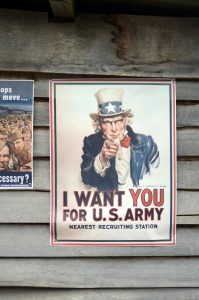
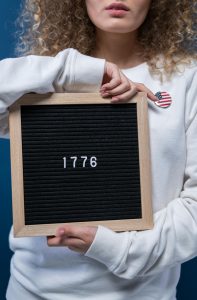
The California Nugget is CGS’ esteemed semi-annual journal and we want to hear where you were in 1776.

Okay.  Maybe not YOU, but your ancestors.  Dig into your family tree and scroll back to 1776.  Who do you find?

I find a 4th great-grandfather born just 2 months after the Revolution in Harrison County, VA (on 16 September 1776).  Stories say Asahel Wilkinson was THE hunter and known to kill a bear before breakfast and bring the cubs home for pets.  In 1811, he moved his family to Ohio, in what is now Adams township in Champaign County.  At the time, he was the first (non-Native American) settler.

Interesting fellow for sure!  Who are YOUR interesting 1776ers?!?  Send to:
[email protected]  

Helpful Links
Events: https://www.californiaancestors.org/events-and-education/
Special Interest Groups: https://www.californiaancestors.org/special-interest-groups-for-members/
Calendar view: https://www.californiaancestors.org/cgs_calendar/
Tips & Talk: Oakland FamilySearch Center Family History Classes: https://www.familysearch.org/en/centers/oakland_california/classes
Barbie Day

by Debbie Mascot (3/9/2026)

To register for an event or for more information, click the link for any event. All times are Pacific Time.
Questions? Email 
[email protected]

I did some googling to get some ideas of what other things I could write about and I came across a website that logs different odd “Day of” for different events through the year.  That’s how I found out that National Barbie Day is celebrated annually on March 9.  While I grew up with Barbies, I was more of a tomboy and cut off certain…bits… to turn them into GI Joes.  So I didn’t really know the history or why there would be a National Barbie Day.  Rabbit hole, here we go!

March 9, 1959, Barbie made her debut at the American International Toy Fair in New York, NY.  Since we had a birthday, could we do her genealogy?

Of course we can.

Barbie’s “family tree” spans decades, careers, body types, social movements, and global generations of children.  Where did she come from?  Who shaped her? How were her descendants transformed?  Let’s make some analogies!

The Genealogy of Barbie

Roots
Ruth Handler, co-founder of Mattel, saw her daughter, Barbara, playing with paper dolls and came up with the concept of a 3D version of a fashionable young woman would could be anything (even GI Joe, apparently).  On March 9, 1959, Barbara “Barbie” Millicent Roberts was born to George and Margaret Robers (in the fictional town of Willows, Wisconsin).

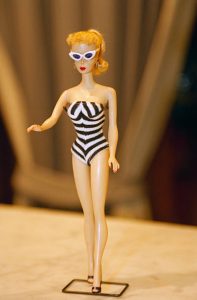
A blonde version of the first Barbie doll, wearing a black-and-white zebra striped swimsuit and topknot ponytail, on display as manufacturer Mattel celebrates production of the millionth Barbie. (Photo by THIERRY ORBAN/Sygma via Getty Images)

First Generation (1959–1969)
This decade created the core household and the “original family group sheet” of the Barbie lineage.  Barbie’s earliest “family members” established the roots of her lineage:

  • Ken Carson (1961) — introduced as her boyfriend, one of the earliest “marriage-record-adjacent” relationships in the Barbie sphere.
  • Midge Hadley (1963) — Barbie’s best friend, occupying the “trusted FAN line.”
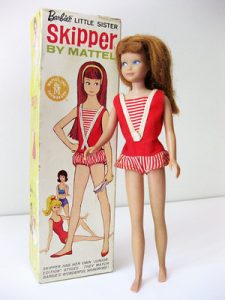
  • Skipper Roberts (1964) — Barbie’s younger sister, marking a new branch in the family.

Second Generation (1970s–1980s)
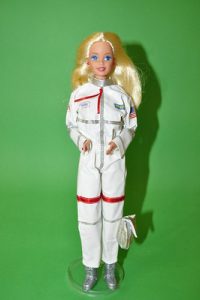
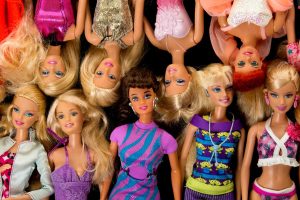
As genealogies evolve through marriages, migrations, and cultural changes, Barbie’s lineage expanded dramatically in these decades.  In this generation, Barbie focused on building her career and ethnicity goals.  She was an astronaut, a surgeon, and Olympian.  She was a superstar and a rockstar (and, in my favorite version, grew hair that you could cut!  With SCISSORS!).  Her increased diversity (black, Latina, Asian) helped her grow family branches through this second generation.

Third Generation (1990s–2000s)
In genealogy, a new generation often brings movement—urbanization, new technology, new roles.  Barbie experienced the same cultural “migration.”  In the digital age, we saw Digital Barbie—films, CDs, websites, games, and all kinds of electronic accessories.  Her body also adapted to a new image of beauty and her body became more realistic and her face changed shape. She came with varying accoutrements and had very specific focuses. I remember taking my 2-year-old daughter to Target in 2004 and for the first time ever, she expressed a liking to Barbie. I made it into a Moment with a Capital M and brought it home for her. She proceeded to toss the Barbie and go for the pooping dog she came with.

Fourth Generation (2016–Present)
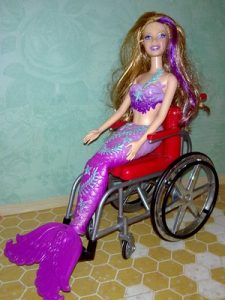
In 2016, Barbie’s family grew with the Fashionistas line.  A huge rebranding where her family branched into many, many cousins (all named Barbie).  They made curvy, petite, and tall Barbies.  Numerous skin tones and many different facial structures.  They had wheelchairs and hearing aids and prosthetic limbs. Their hairstyles and carriers were nearly infinite.  Barbie’s family grew to proportions that made her more relatable to all kinds of children.  And for us genealogists, think of all the shaky leaves with all these new descendants!

The 2023 Cultural Revival
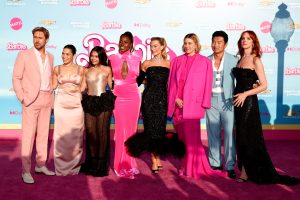
In 2023, there was a “Barbie” film that caused a worldwide return to Barbie’s roots, pushing her lineage into a new era of cultural interpretation.  It acted almost like a family reunion, bringing old branches and new branches together into a single celebration of identity, history, and reinvention.

Ryan Gosling, America Ferrera, Ariana Greenblatt, Issa Rae, Margot Robbie, Greta Gerwig, Simu Liu and Hari Nef at the premiere of “Barbie” held at Shrine Auditorium and Expo Hall on July 9, 2023 in Los Angeles, California. (Photo by Christopher Polk/WWD via Getty Images)

Genealogy is about understanding change over time. Barbie’s story is the same: each generation shows us what society valued, questioned, or hoped for. Her “descendants” are not people but possibilities:
hundreds of dolls representing the expanding definition of identity, ambition, beauty, and belonging.

Barbie’s lineage isn’t biological—it’s cultural, stylistic, and societal.  But like any genealogy, it tells a larger story about how families—and cultures—grow, adapt, and reflect the times.  You can see here that even though I wasn’t a Barbie enthuse, I had two Barbie notes, just off the top of my head.  There are more in the bank and I bet you all have a Barbie story of your own.

Care to share?!? If you are a logged-in CGS member, you can post in the comments.  Otherwise, feel free to share directly with me.  I would love to hear.

Sources:

Helpful Links
Events: https://www.californiaancestors.org/events-and-education/
Special Interest Groups: https://www.californiaancestors.org/special-interest-groups-for-members/
Calendar view: https://www.californiaancestors.org/cgs_calendar/
Tips & Talk: Oakland FamilySearch Center Family History Classes: https://www.familysearch.org/en/centers/oakland_california/classes
Spring Forward

by Debbie Mascot (3/5/2026)

To register for an event or for more information, click the link for any event. All times are Pacific Time.
Questions? Email 
[email protected]

Twice a year, most of us shuffle around the house adjusting clocks, grumbling at the lost hour of sleep in spring or enjoying the brief gift of an extra hour in fall. Where did this whole “time change” idea begin?

Before the late 1800s, there was no such thing as standardized time in North America. Noon was simply when the sun reached its highest point in your community — meaning every town ran on slightly different time.  And this was just fine… until trains entered the picture.

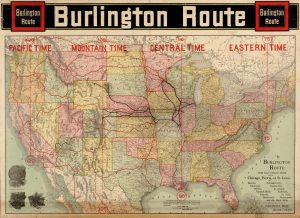
When railroads started crossing the US and Canada, each station with their own local time was chaos.  Trains couldn’t keep schedules and people couldn’t figure out arrival and departure times.  On November 18, 1883, North American railroads implemented the first of a standardized time system: Standard Railway time, which created the four time zones.

Railroad Map

Source: https://guides.loc.gov/this-month-in-business-history/november/day-of-two-noons

Nearly a hundred years earlier, Benjamin Franklin joked about saving candles by waking earlier in the summer, but the first real Daylight Saving Time policy came during World War I, when several countries adopted it to save fuel and energy. The U.S. adopted Daylight Saving Time in 1918, abolished it after the war, and reinstated it during World War II for similar reasons.  After World War II, states and cities made their own decisions and chaos returned.

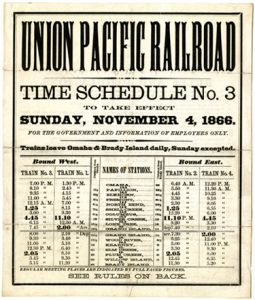
Railroad Schedule

Source: https://www.uprrmuseum.org/uprrm/exhibits/curators-corner/employee-timetables/index.htm

In 1966, the Uniform Time Act allowed States to opt out (Arizona and Hawaii still do not participate), and noted that if you did participate, Daylight Saving Time began on the last Sunday in April and ended the last Sunday in October.  That schedule has been revised many times until we are now at the second Sunday in March/first Sunday in November schedule that we are on now. begins on the second Sunday of March and ends on the first Sunday of November.

The concept of saving energy with a time change was to align waking hours with natural daylight.  By setting the clocks forward, people spend less time in the dark during the morning and gain an hour of light in the evening.  Theoretically, this reduces the energy needed to light and heat during these months.  That said, we now have air conditioning which takes more electricity than the lights that everyone was worried about at the time…

So is it efficient? Is it smart to continue?  I don’t know.  But what I do know is that once we change that clock on Sunday morning, I’ve got more spring in my step, and my need to curl up with a book and a hot beverage wanes.  When it ends in November, I get excited for the book/beverage nights again, though.

Sources:


Helpful Links
Events: https://www.californiaancestors.org/events-and-education/
Special Interest Groups: https://www.californiaancestors.org/special-interest-groups-for-members/
Calendar view: https://www.californiaancestors.org/cgs_calendar/
Tips & Talk: Oakland FamilySearch Center Family History Classes: https://www.familysearch.org/en/centers/oakland_california/classes