
Online genealogy, week of June 1-7

by Jennifer Dix (6/1/2020)

Here are some online genealogy events offered this week. Most are free. See our post Genealogy Learning in the Time of Coronavirus,” for links to archived classes at Ancestry, FamilySearch, RootsTech, and more.

Online Conferences:
June 5-7: The Ontario Genealogical Society hosts a virtual conference. There are online events every day this week leading up to the conference. See website for details.
June 6: America: Our Records and Our History (Pima County Genealogical Society)
June 6: Genealogical Society of New Jersey virtual conference

To register for a class below, please click on the link of the organization.

Legacy Family Tree and MyHeritage offer these webinars:

June 2 & 3: Sources for Landed and Titled People by Paul Milner
June 3:What are the Odds?” An online tool that can help solve DNA puzzles by Jonny Perl

FamilySearch has free webinars every week. This week:

June 2: The Research Process, Research Help, and Searching Records

Conference Keeper lists many of the above, as well as the following:

June 2: Return to the Catskills (Wyner Family Jewish Heritage Center Event) by Phil Brown

June 2: “How do you do that? Practical Suggestions for People Who Want to do Genealogical Lecturing” (Utah Genealogical Association) by Jean Wilcox Hibben
June 2: Understanding Graveyard Symbols (Allen County Genealogy Center) by Cathy Wallace 
 
June 3: From a Box in the Closet to a Treasured Family Heirloom: Organizing and Digitizing your Family Photos by Sara Cochran
June 3: Exploring the Rhineland-Palatinate by Claire Gebben
June 3: How to Use the FamilySearch Wiki and Catalog with Amber Oldenburg
 
June 4: Researching Indigenous Ancestors in Northern Ontario by Jenna Lemay

June 4: Brickwall Busting Strategies: Hammering at the Wall by Mid-Cities (Texas) Genealogical Society
June 4: Village Family Books [Ortssippenbücher] (Germanic Genealogy Society) by Warren Bittner
Jun 4: Y-DNA Basics with Q&A on any DNA topic (Allen County Genealogy Center) by Sara Allen

June 5: The English Garden: Perfection on Earth (New England Historical and Genealogical Society) by Curt DiCamilo

June 6: Beginning Italian Genealogy Research (Virtual Genealogy Association) by Mary Hojnacki
June 6: Using Military Records for African American Research Workshop (Afro-American Historical & Genealogical Society of Nashville) with Tina Cahalan Jones


Stay safe, be well, and happy learning!

Copyright © 2020 by California Genealogical Society

Immigrant Sugar Plantation Workers in Hawaii: A History

by Jennifer Dix (5/29/2020)

As we observe Asian Pacific American Heritage month, we are pleased to share this post by CGS volunteer Cindy Thomson.

The first sugar plantation workers in Hawaii were Native Hawaiians.  Given their aversion to the regimented, arduous labor required in the cane fields and the widespread view (at least at that time) that disease was driving the Hawaiians to extinction, the sugar planters, mostly American businessmen, began looking elsewhere for labor.  Between1852 and 1946, over 375,000 workers were recruited from around the world.  Immigrants who began arriving before 1900 included the Chinese, Portuguese, Germans, Norwegians, Galicians, and mainland (naichi) Japanese. Those who began arriving in 1900 or later included Okinawans, Puerto Ricans, Koreans, Filipinos, African Americans from the U.S. South, Spaniards, and Russians from Manchuria. The multi-ethnic nature of the workforce reflected early efforts to offset the numerous Chinese with Portuguese and other Europeans, and later efforts to offset the increasingly militant Japanese with recruits from elsewhere in the world. Europeans often brought their families, while most other groups consisted largely of males who arrived alone.

Contract between Japanese worker and McBryde Sugar Company, Kauai.
(Source: Hawaiian Sugar Planters’ Association Plantation Archives,
Hamilton Library, University of Hawaii at Manoa)

The duration of labor contracts was five years for the Chinese, later shortened to three years. A contract typically required a work commitment of six days per week, ten hours per day in exchange for housing, food, water, firewood and medical care. Some of the Europeans were also offered homestead land. The ethnic hierarchy on the plantations dictated both living conditions and employment opportunities. Caucasians (other than Portuguese) were at the top of the hierarchy, then the Portuguese, followed by East Asians, with Filipinos (who were the last non-Europeans to arrive) at the bottom.


Low pay kept field and mill workers at the poverty level, and housing, sanitation and medical care were often substandard. On some plantations, grueling work conditions and sometimes harsh treatment by field overseers (“lunas”) led to resistance by the workers. This included work slowdowns, strikes, desertions, feigned illness to avoid work, violence against lunas, and property destruction – including arson in the cane fields and sugar mills.  The plantation workforce was up to 70 percent Japanese in the early 1900s and about 70 percent Filipino by the 1930s. Japanese and Filipino strikes were the most disruptive – typically lasting for months and involving large numbers of workers on multiple plantations. Strikers were evicted from plantation housing and other ethnic groups were brought in as strikebreakers. The Hawaiian Sugar Planters’ Association (HSPA) often made wage or other concessions months after a strike ended, so as to not associate the concessions with the strike.

A record card for Filipino Esteban Fernandez indicates he was fired
by the Oahu Sugar Company after taking part in a strike in April 1924.
(Source: Filipino Laborers Collection, Joseph F. Smith Library, BYU-Hawaii)


Most workers left the plantations as soon as their contracts expired and found work elsewhere in Hawaii or on the U.S. mainland.  Some Asians returned home, due to the proximity of their homelands to Hawaii.  The 1882 Chinese Exclusion Act, which took effect in Hawaii when it became a U.S. Territory in 1900, terminated Chinese immigration to the islands.  When Korea became a Japanese protectorate in 1905, Japan stopped Korean immigration to reduce competition for their own workers in Hawaii. Under the 1907 “Gentlemen’s Agreement” between the U.S. and Japan, Japanese immigration was also restricted. Even after these dates, however, some Asians already in Hawaii were allowed to bring family members, including “picture brides,” to Hawaii.

The HSPA gradually mechanized operations in the fields and mills – providing their workforce with more skilled, blue-collar jobs and some advancement for those who were at the bottom of the plantation hierarchy.  Improved living and working conditions motivated multiple generations of the same family to stay on the plantations.  These laborers lived, worked and recreated together, enjoyed each others’ foods, intermarried, and sent their children to the same schools.  Plantation acres in cultivation began to decline noticeably in the 1970s and the last plantation closed in 2016.  Some families still have reunions to “talk story” about the tight-knit communities where they once lived and perhaps recall the ancestors who came to Hawaii so long ago.

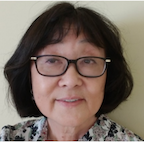
CIndy Thomson photo
Cindy Thomson’s interest in genealogy began with family stories about her immigrant ancestors in Hawaii and evolved into an obsession over the past 15 years. She is a CGS member and teaches a class on “Immigrant Sugar Plantation Workers in Hawaii: A Multi-ethnic Approach to Genealogy.” For more information, contact her at [email protected]

Copyright © 2020 by California Genealogical Society

Chinese Exclusion Act files in Seattle: a treasure trove of information

by Jennifer Dix (5/26/2020)

We continue our observance of Asian Pacific Heritage Month with this blog post about the Chinese Exclusion Files found at the National Archives in Seattle. Trish Hackett Nicola leads a free webinar on the collection on May 28.

Trish Hackett Nicola never expected to find herself specializing in records related to the Chinese Exclusion Act. Her own ancestry is German and Irish. But when the Seattle-based genealogist met Loretta Chin about eighteen years ago, she was introduced to the Chinese Exclusion Act files held at the National Archives at Seattle. Chin “told me about how wonderful these files were, and she became my mentor,” says Nicola. Today Nicola works with a small team of volunteers who have devoted themselves to preserving and indexing the more than 50,000 government files collected on Chinese immigrants between 1882 and 1943. The files represent those who arrived at the ports of Seattle, Sumas, and Port Angeles in Washington; Portland, Oregon; and Vancouver, B.C.

Since May 2015, Nicola also has published an ongoing blog, ChineseExclusionFiles.com, in which she features particularly interesting finds from the records. “I started the blog to highlight the personal stories that are found in the Chinese Exclusion Act case files,” she says. “I wanted more people to know what valuable family and social history is found in these files.” 

Lee Gok Suey, father of San Francisco Mayor Ed Lee

There’s the case file for Lee Gok Suey, for example, born in China although both his father and grandfather were American citizens. His father, grandfather, and other relatives had to undergo detailed and repeated interrogations before Lee was finally granted admission to the U.S. in 1937, at the age of 17. Lee grew up, served in the Korean War, married, and fathered five children—one of whom, Edwin, would become San Francisco’s first Asian-American mayor in 2011. This file contains more than 50 pages of detailed information about Ed Lee’s ancestors and relatives, including specifics of the village in China where the family came from.

12-year-old Ora Chang in 1910

In sharp contrast is the slim file that contains an application by Charlotte Chang seeking to take her young son and daughter with her on a trip to visit relatives in China in 1910. The file contains names and addresses of many family members but little more. It does, however, include a charming photo of twelve-year-old Ora Ivy Chang, dressed all in white, with enormous satin bows in her hair.

The files vary widely in content; each is unique, providing a glimpse into the lives of immigrants from all parts of China. They usually contain “incredible” photos, Nicola says, and intimate details of the subject’s life. “The file might describe the person’s village and neighbors, or tell if they owned a rice cooker, or the number of windows in their house.” Of crucial importance to genealogists is that the files usually contain the subject’s original name written in Chinese characters, enabling researchers to trace their Chinese family back hundreds of years. “We now have two volunteers who speak and read Chinese and we are including the name of the subject of the file in Chinese characters on the blog,” says Nicola.

The Seattle files are indexed by file name and number. Nicola and fellow volunteers are now meticulously adding important metadata to each file—names, keywords, cross-references to relatives’ files, notes on photos, maps, or other items of interest, and much more. Trish Hackett Nicola gives an overview of the Seattle Chinese Exclusion Act Files on Thursday, May 28. This is a free webinar hosted by CGS; register at the link at EventBrite.

Trish Hackett Nicola is a certified genealogist with more than 30 years of experience. She has volunteered at the National Archives in Seattle since 2001.
 

Copyright © 2020 by California Genealogical Society