
To register for an event or for more information, click the link for any event. All times are Pacific Time.
Questions? Email [email protected]
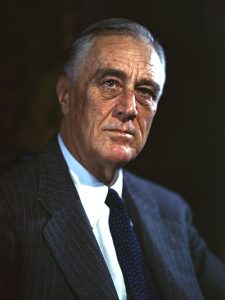
“Our greatest task is to put people to work. This is no unsolvable problem if we face it wisely and courageously. It can be accomplished in part by direct recruiting by the Government itself, treating the task as we would treat the emergency of war, but at the same time, through this employment, accomplishing greatly needed projects to stimulate and reorganize the use of our national resources.”
– Franklin D. Roosevelt, 4 March 1933
After coming home from college, my grandfather and his friend, Harry Ravenscroft, who my father was named for, decided that it would be fun to work in the bar in Midland, South Dakota. They “had a bit too much fun,” and one day, my Great Grampa and Harry’s dad came in.
The boys were given an ultimatum. Go into the CCCs or… go into the CCCs.
So the boys went into the CCCs.
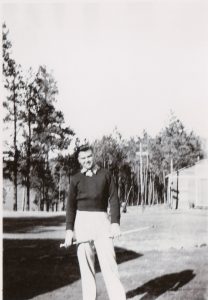
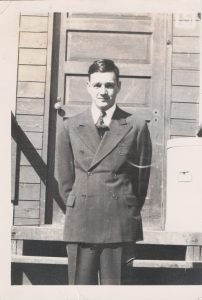
The CCCs were part of Franklin Delano Roosevelt’s New Deal- the most popular of all New Deal programs. The CCCs provided jobs to conserve and develop natural resources in rural government lands. They began in 1933 and ended in 1942, providing nearly 3 million unemployed men, ages 18 to 25, with $30 a month stipend ($25 went to their parents).
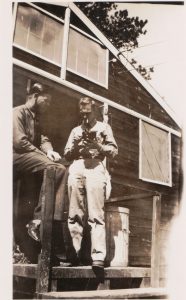
During the time of the CCCs, over 3 billion trees were planted, 800 parks were constructed and upgraded, forest fire fighting methods were created, and a number of service buildings and roads were created in remote areas. Although part of the Reserve Army, the CCC was under the direction of the forest service in my grandfather’s camp in the Black Hills of South Dakota. Therefore, much of his work was related to forest service.
From the sound of Grampa’s voice as he spoke of the CCCs, and from the videos and newsreels I found when researching, it’s apparent that the CCCs didn’t just give these boys something to do; it gave them hope and pride. The Great Depression took so much away, and the CCCs gave it back. FDR noted during a visit to a CCC camp that the CCC boys, on average, gained 12 pounds each. You can see the pride and humor in the video, as he said this. The CCCs also made sure that there were classes in the evenings so that everyone had a chance to learn to read and write. There were also games, and even variety shows.
My grandfather didn’t tell me about games, education or variety shows, though. He told me about the Black Hills of South Dakota and his accomplishments there through his time in the CCCs. The things he did and built. The places he went. The people he met.



Helpful Links
Events: https://www.californiaancestors.org/events-and-education/
Special Interest Groups: https://www.californiaancestors.org/special-interest-groups-for-members/
Calendar view: https://www.californiaancestors.org/cgs_calendar/
Tips & Talk: Oakland FamilySearch Center Family History Classes: https://www.familysearch.org/en/centers/oakland_california/classes
FEB
2026