Archive for May, 2009

CGS in the News: Family Tree Magazine – July 2009 issue

Posted by:

The July 2009 issue of Family Tree Magazine is out and some CGS researchers are featured in “Changing Gears” an article by Maureen A. Taylor, the Photo Detective, about “reverse genealogy” – finding living relatives to further your research.

Among the five reasons to research forward in time, Maureen counts “grow your family tree” and two of her examples come from the California Genealogical Society. CGS President Jane Lindsey is sited for her use of newspaper research to sidestep San Francisco record gaps after the 1906 earthquake and fire. One of Jane’s clients was able to make a Mayflower connection “through the work of researchers on three continents.”

CGS example two sites the work that Lavinia Schwarz, Judy Bodycote and Richard Rees did on the Peralta Project and the database they created of some 700 descendants of Luis Maria Peralta.

It’s great to see the fantastic research team at CGS acknowledged for their excellent work! Thanks, Maureen.

0

Wordless Wednesday

Posted by:

Wordless Wednesday
Intermediate Genealogy Series with Marge Bell
Reading and Transcribing the Handwriting of Colonial America

Photograph courtesy of Tim Cox, Oakland, California 5/9/2009.

0

Puckerbrushed by Randy

Posted by:


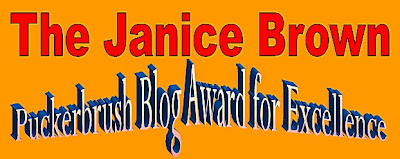
I was gobsmacked to learn that Randy Seaver included the CGSL blog in his Genea-Musings: My Puckerbrush Blog Awards of Excellence and bestowed The Janice Brown Puckerbrush Blog Award for Excellence. Randy writes Genea-Musings and is the most prolific genealogy blogger, just ask anyone. He’s been tremendously kind and supportive and his Chula Vista Genealogy Cafe was a model when I got started in the society blogging business. Thank you, Randy, for the honor.

The award was created in honor of genealogy blogger Janice Brown by Terry Thornton, author of Hill Country of Monroe County, Mississippi, who explained that “Janice told us all about the word ‘puckerbrush’ in an article she posted August 27, 2007, at Cow Hampshire. Terry elaborated a bit further in a comment:

On any land allowed to go fallow and left untended, a wild assortment of wild plants grow – in some areas, this wild growth results in such a thicket of plants that it is almost impossible to push your way through the growth.

So it is with the growth of blogs — so many that it is impossible to read them all. But in the puckerbrush eventually a few plants/trees become dominant and influence all who view them through the thick surrounding puckerbrush.

And it is those outstanding blogs whose influence spreads beyond just the surrounding rabble of puckerbrush that I’m honoring.

Terry issued this challenge:

Henceforth these awards will be called the Janice Brown Puckerbrush Blog Award for Excellence. All blog authors are hereby challenged to name the ten blogs which have influenced their writing the most and list them as a tribute to Janice — the Janice Brown Puckerbrush Blog Awards for Excellence.

I see this award as a way to acknowledge the blog authors who paved the way and inspired us to take our own blogging baby steps and to those who continue to influence our work. Here are my ten recipients for the Puckerbrush Blog Award for Excellence:

1.) Steve Danko: Steve’s Genealogy Blog was the first blog I ever read. Early in 2007 I stumbled upon his New Year’s Resolution list where he pledged to renew his California Genealogical Society membership and help with a society project. Since then he has become a wonderful supporter of CGS and a noted lecturer (he’ll be our guest speaker at the July membership meeting.) Steve’s blog is the model for what a research blog should be.

2.) Jasia of Creative Gene is my blog mentor and she is the reason I started the blog for the society. Her series Declining Membership in Genealogical Societies should be required reading for every genealogical society board member. As a matter of fact, it’s been awhile since I’ve done a re-read so I’m adding it to my Google Task List. (She always has great ideas.)

3.) Thomas MacEntee of Destination: Austin Family is the king of the GeneaBloggers and one of the most supportive and generous people I know. I am thrilled that we will finally meet at Jamboree. (Summit 2 Son of Blogger is going to be a kick.)

4.) Denise Olson of Family Matters: Tech Support for the Family Historian is my “go-to” person for anything technical and everything macintosh. She is all about helping genealogists into the digital age.

5.) Miriam Robbins Midkiff of Ancestories: The Stories of My Ancestors and the Eastern Washington Genealogical Society Blog has become another blogger buddy. She introduced Scanfest – a monthly online scanning party so genealogists can chat while they digitize photos. Hers was one of the few society blogs out there when I got started.

6.) Linda, the Footnote Maven, and author of the beautiful Shades of the Departed, creates blogs that are as beautiful to look at as they are a pleasure to read. The fact that I ever actually started this blog is a testament to fortitude – hers is a tough act to follow.

7.) Maureen Taylor is an incredibly talented speaker and author who fused her expertise in history, photography and genealogy to become The Photo Detective.

8.) Schelly Talalay Dardashti is the author of Tracing the Tribe: The Jewish Genealogy Blog – a superlative example of what I now know is a niche blog. Whenever I get tempted to go beyond the scope of what the CGSL blog should be I think about Schelly’s good example.

9.) Ben Sayer of Mac Genealogist.com is one of my new favorites. He is re-introducing me to my mac genealogy software – Reunion®. I love his QuickTime videos.

10.) Julie Cahill Tarr of GenBlog makes my top ten because I thank her almost everyday. Her post Managing Your Blog(s) is where I learned to create a blog editorial calendar. It’s the organizational tool you MUST use if you are writing a society blog. I’ve just recommended that we create a similar calendar to coordinate our marketing efforts.

There you have it – my top ten, in no particular order. I hope many other gen-bloggers will come forward with their own list of ten influential blog authors.

4

The Great Lecture You Probably Missed

Posted by:

Laura Spurrier sent this report on the CGS May Membership Meeting with Jim Terzian:

CGS recently hosted a great speaker on heraldry, Jim Terzian. I almost missed the lecture myself, afraid it would be too stuffy. The opposite was true: Jim turned out to be delightful and not a snob at all. (He’s secretary-treasurer of a society called Descendants of the Illegitimate Sons and Daughters of the Kings of Britain, AKA the “royal bastards.”)

Jim started by explaining how coats of arms began as a means of displaying a person’s status and prestige in mostly illiterate medieval society. They continue in use to this day; the Great Seal of the United States is a heraldic seal. Many of our ancestors may have had coats of arms. Only in the British Isles are they restricted to members of the nobility. They are also hereditary, fathers to sons or in some cases to daughters. The fact that a family with the same name as yours has a coat of arms doesn’t mean you can automatically claim it too.

Jim Terzian taking questions before showing his chart.

For genealogists, coats of arms are a form of visual documentation of family trees. For example, if a man with a coat of arms marries a woman with arms in her own right, their sons bear arms showing half of each. All the little add-ons on either side of a shield have significance too. Jim demonstrated how this works by unrolling a gorgeously colored 44” x 22’ chart of all the arms of one of his ancestors, arranged in family tree form. I was thrilled when I realized that she was my ancestor too.

Jim Terzian unrolled his 22 foot chart for all to see.


Detail of the chart.

Photographs courtesy of Tim Cox, Oakland, California, 5/9/2009.

2

Report #4: NGS 2009 Family History Conference in Raleigh, North Carolina

Posted by:

Jeffrey Vaillant concludes his reports from Raleigh with this one from Saturday, May 16, 2009:

The day began with another brisk walk to the Convention Center, passing by the State Capital monuments “To Our Confederate Dead” and “To Our Confederate Women”. My abolitionist-unionist brain struggles with the reminders of the Civil War, or as is called here, “The War of Northern Aggression.”

This day’s learning started with Locating and Interpreting Naturalization Records presented by Gladys Friedman Paulin. Two more morning sessions followed: Order in the Court: Ancestral Trials and Tribulation by Sharon Tate Moody and Okay, I “Got the Neighbors”…Now What do I do with Them!!! by Elizabeth Shown Mills.

I skipped lunch and walked back to the hotel to type up my experiences since I had fallen behind. When I left for the afternoon program I was greeted with a rain downpour and some Southern hospitality in the form of a helpful stranger with an umbrella. Speaking of weather, it has been warm and humid – afterall, this is the South.

The final two lectures were Our National Treasure: The Library of Congress by Pamela Boyer Sayre and What Is a Reasonably Exhaustive Search? by Laura Murphy DeGrazia. Wow, what a lot of learning!

Back to the room to conclude the notes and to start digging in to all the great ideas gathered over the last four days. The NGS will be in Salt Lake City next year starting in late April. It is a great learning experience well worth the time and expense. Thanks for reading and see you at the next CGS meeting – I’ll be the guy with the dark circles under his eyes.

Read the entire series:
Day One: NGS 2009 Report
Day Two: NGS 2009 Report
Day Three: NGS 2009 Report
Day Four: NGS 2009 Report

4

Report #3: NGS 2009 Family History Conference in Raleigh, North Carolina

Posted by:

CGS member Jeffrey Vaillant continues his reports with this one from day three, Friday, May 15, 2009:

After a very full Thursday, Friday dawned bright and early, but I confess, I missed the dawn and the 8 a.m. session. I hustled to the Convention Center to gather in Thomas W. Jones’ presentation Problem Solving with Probate, followed by Barbara Vines Little’s session Tax Records: A Wealth of Information.

The Association of Professional Genealogists (APG) lunch speaker was Dick Eastman who spoke about The Organized Genealogist which he admitted he was not. He did give hints about using Google, RSS, digitizing and backing up as tools of efficiency and perhaps to have time to be more organized.

After lunch, Patricia O’Brien Shawker presented Getting the Most Out of Vital Records then Alison Hare from Canada gave an excellent account, John Green: Whose Father Was He?

I spent some time on the tradeshow floor learning what was new with familysearch.org and ancestry.com and scored on the familyseach pilot site when I found the record of my grandfather’s third marriage in 1907. Now I have to figure out what happened to that one since he married my grandmother in 1909. For every fact there seems to be three questions.

The NGS Banquet featured J. Mark Lowe and Lesson Learned from a Carolina Traveler. It turned out to be a roast of Helen Leary, CG, FASG, FNGS, who was pleasantly surprised. Her two sons were present to enjoy the event.

Tomorrow, Saturday, will be another big day.

Read the entire series:
Day One: NGS 2009 Report
Day Two: NGS 2009 Report
Day Three: NGS 2009 Report
Day Four: NGS 2009 Report

0

Report #2: NGS 2009 Family History Conference in Raleigh, North Carolina

Posted by:

CGS member Jeffrey Vaillant sent this report on day two, Thursday, May 14, 2009:

This proved to be a very full day which got me behind in reporting. The day started with a brisk walk from the Clarion Hotel to the Conference Center (about one mile) past the State Capital built between 1830-35 and some beautiful limestone constructed churches – a pleasant walk before the humidity sets in.

The session started with a three-hour seminar for the Board for Certification for Genealogists (BCG) process lead by Laura Murphy DeGrazia, Alison Hare and Thomas W. Jones. Since I intend to be certified, this was a most helpful session and when combined with two portfolios at the BCG booth gets the battery charged up.

Next up was Elizabeth Shown Mills” presentation on Finding Females: Wives, Mothers, Daughters & Paramours.

Then it was time for the BCG Luncheon and speaker Kathy Gunter Sullivan’s talk Late Night Ruminations. The lunch left a great deal to be desired but I did not come for the meals.

Afterwards there a bit of time to visit the trade show floor with its 150-200 vendors and all kinds of genealogical goodies. The biggest booths belong to ancestry.com and familysearch.org.

Back to class on the run to hear Thomas W. Jones’ Strategies for Finding “Unfindable” Ancestors, followed by Elizabeth Shown Mills’ Finding Origins and Birth Families: Methods That Do or Don’t Work. I was definitely on information overload by this point and loving it.

Then time to meet up with other Professional Genealogy Study Group members to walk to the Big Easy for dinner and conversation. There were fourteen of us gathered from each of the three groups. It was good to see the faces behind the e-mails and instant messaging, but not much time to relax before we had to head back to the Conference Center.

Ancestry.com had an hour presentation on what they are doing domestically and internationally with content additions and their daily struggle between content and quality.

Summing up day two: I am tired and glad to have had all these experiences and only half way through the conference. I’m already thinking about the APG/FGS meetings in Little Rock in September.

Read the entire series:
Day One: NGS 2009 Report
Day Two: NGS 2009 Report
Day Three: NGS 2009 Report
Day Four: NGS 2009 Report

0

Report #1: NGS 2009 Family History Conference in Raleigh, North Carolina

Posted by:

CGS member Jeffrey Vaillant took time out of his busy schedule to send this report from the NGS 2009 Family History Conference in Raleigh, North Carolina. Thanks, Jeffrey!

The conference opened Wednesday, May 13, 2009 with what appeared to be about 1500 people in attendance. The Opening Session included a significant announcement – the recognition of Thomas W. Jones as a Fellow in the NGS. He was pleasantly surprised. The opening presentation was an entertaining event with Ira David Wood III sharing his theatrical experience with his family history using the Romeo and Juliet line: “Romeo where art thou?” which he read as “Romeo who are you?”

There are 250 sessions of information to choose from. I am basically being a Thomas W. Jones and Elizabeth Shown Mills groupie. Their presentations are fantastic, combining methodology theory with practice research examples. You can view the full conference program online at the NGS website.

At 5:00 p.m., thirty-two genealogy societies, primarily from North Carolina and Virginia, set up tables to display their wares. There were lots of tempting books to purchase. That was followed by presentations at 7:00 p.m. I attended the one by the Trading Path Association on trails in North Carolina in the 1600-1700 period. It was a full day to be followed by another.

Read the entire series:
Day One: NGS 2009 Report
Day Two: NGS 2009 Report
Day Three: NGS 2009 Report
Day Four: NGS 2009 Report

0
Page 1 of 2 12